
They say that laziness is the mother of invention… I’m fairly confident that nobody would classify my anywhere near the category of ‘lazy’, but I AM always trying to find better ways to do things. When I find techniques that save time, energy, or mental capacity I apply them and direct any capacity savings into ambitions elsewhere.
I’d like to share with you a method we have recently developed for our bluff prairie burns in Pleasant Valley that is now saving us a bunch of time, energy, and extra coordination. I haven’t heard about anyone using these techniques in this application within our local context (which is a bit surprising because these methods really don’t seem all that complicated), but I’m going to take on the responsibility for coining a name. I’d like to introduce you to- The ‘Goat Line’. The name is not a direct reference to the animal but instead to both the rugged hill-climbing abilities required by the human practitioners, and for the context in which this technique is used: our ‘glacial-drift’-free bluff prairies (AKA Goat Prairies).
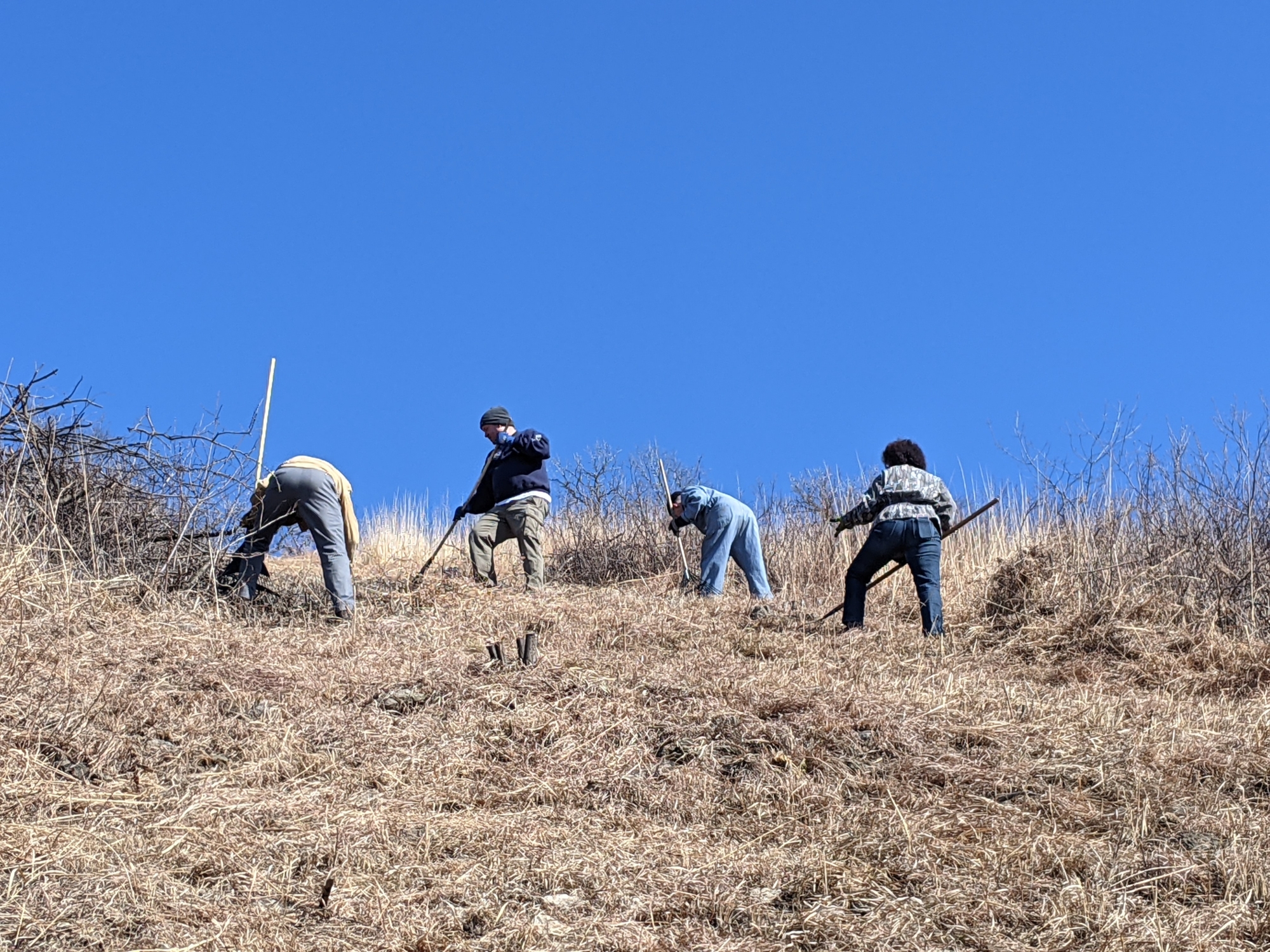
Volunteers creating firebreaks by hand (lots of time and energy)
Why the need?
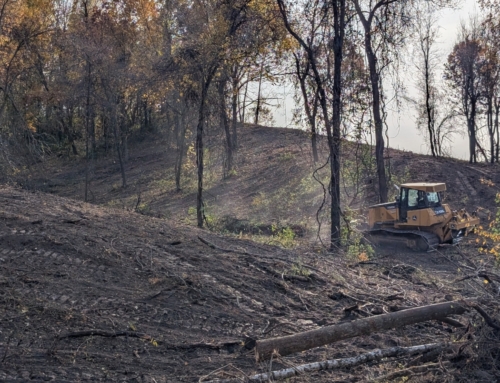
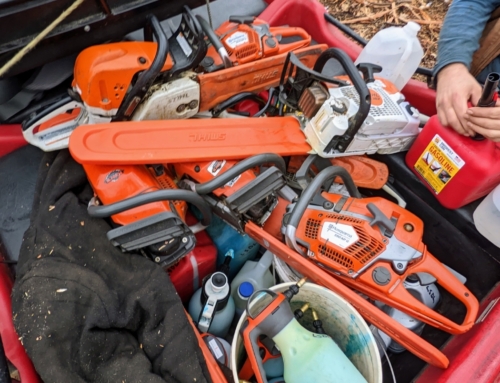
The underlying reason for leaving unburned ‘refugia’ space within our prescribed burn units is to allow for site recolonization by fire sensitive invertebrates (see the previous blog post on Fire for a more general explanation of our burn practices). The practice of leaving sections of last year’s growth requires MORE effort rather than less. It is simple enough to ignite the bottom edge of a bluff unit and let the fire climb and spread freely on its own. When you want to carve out portions within contiguous (continuous & connecting) fuels one is required to create ‘fire breaks’ or fuel-free boundaries. Historically, on our bluff prairies, we would hold work parties prior to our burn season where we would climb the steep slopes with brush cutters, string trimmers, rakes, and blowers to create a 12-15′ wide, clean dividing line between our targeted burn plots and our refugia spaces. As you can imagine, this requires a lot of coordination with volunteers or contractors and a considerable amount of time and energy (not to mention the sweat and blisters). Goat Lines can actually help us achieve our refugia goals without all of that extra prep work.
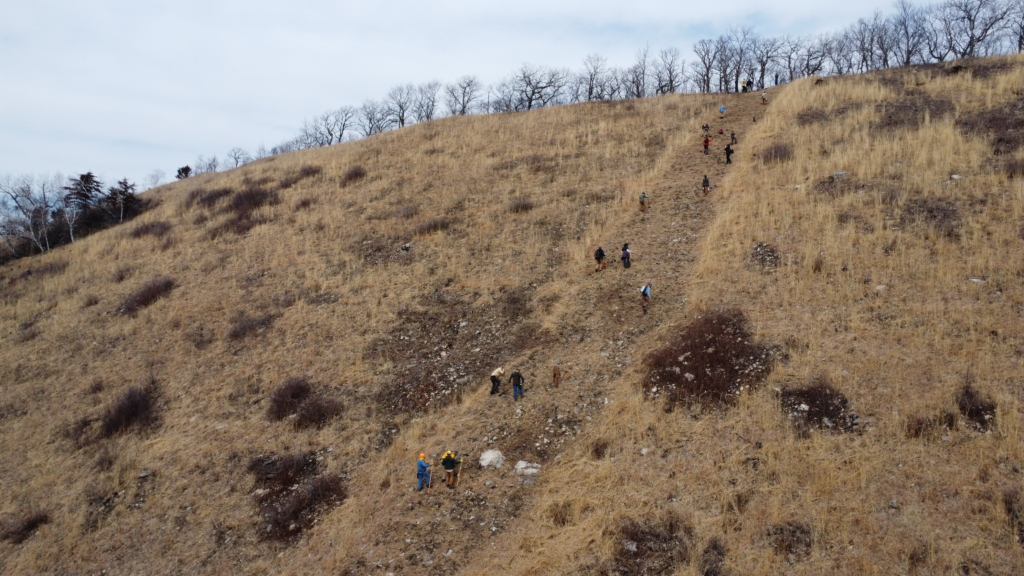
These firebreaks were pride-worthy accomplishments, but are a lot of work!
Our New Solution
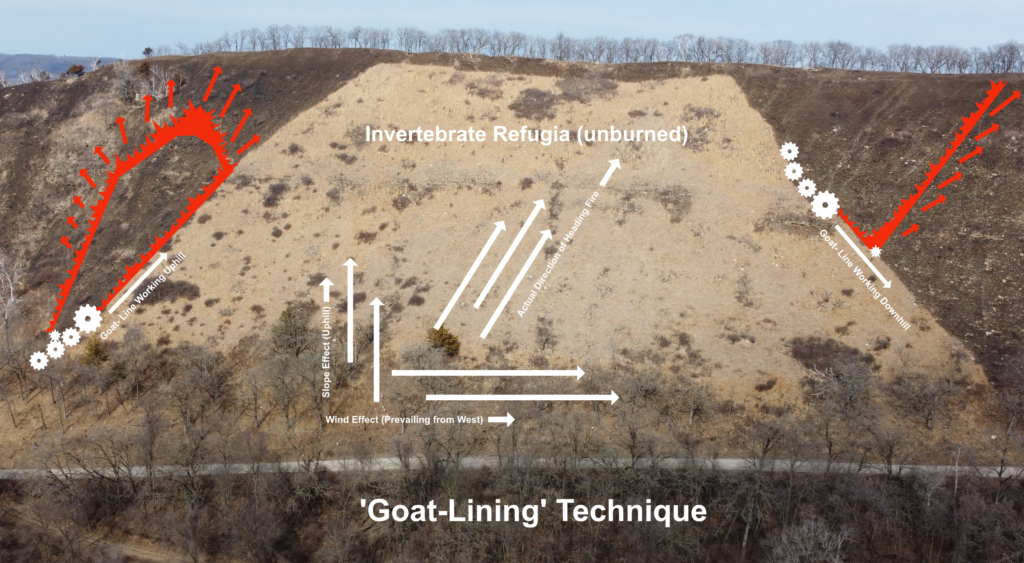
Goat Lining – How does it work?
The idea of the Goat Line is to work with the benefit provided by the steep slopes of our topography. Fire direction and rate of spread is determined largely by the prevailing wind direction and site slope. Fire is ‘tipped’ into fuels by the slope of a hillside just as it is ‘tipped’ by wind. This forwarding of ignition and preheating of fuel materials below the flame causes fire to spread rapidly in uphill and down-wind directions. Typically, we have prevailing ‘Westerlies’ pushing our winds Eastward. Therefore, our fires usually climb the hills moving slightly to the East as they rise. One can perform a small test fire in a safe space to see exactly which direction your own fires might tend to spread (provided similar weather conditions). Although winds can be somewhat variable in direction and strength, the steep slopes provide a consistent uphill directional influence. Flames are almost always going to be restricted to a slow creep when moving in a downhill direction. This is a low ‘backing’ fire – easy to control.
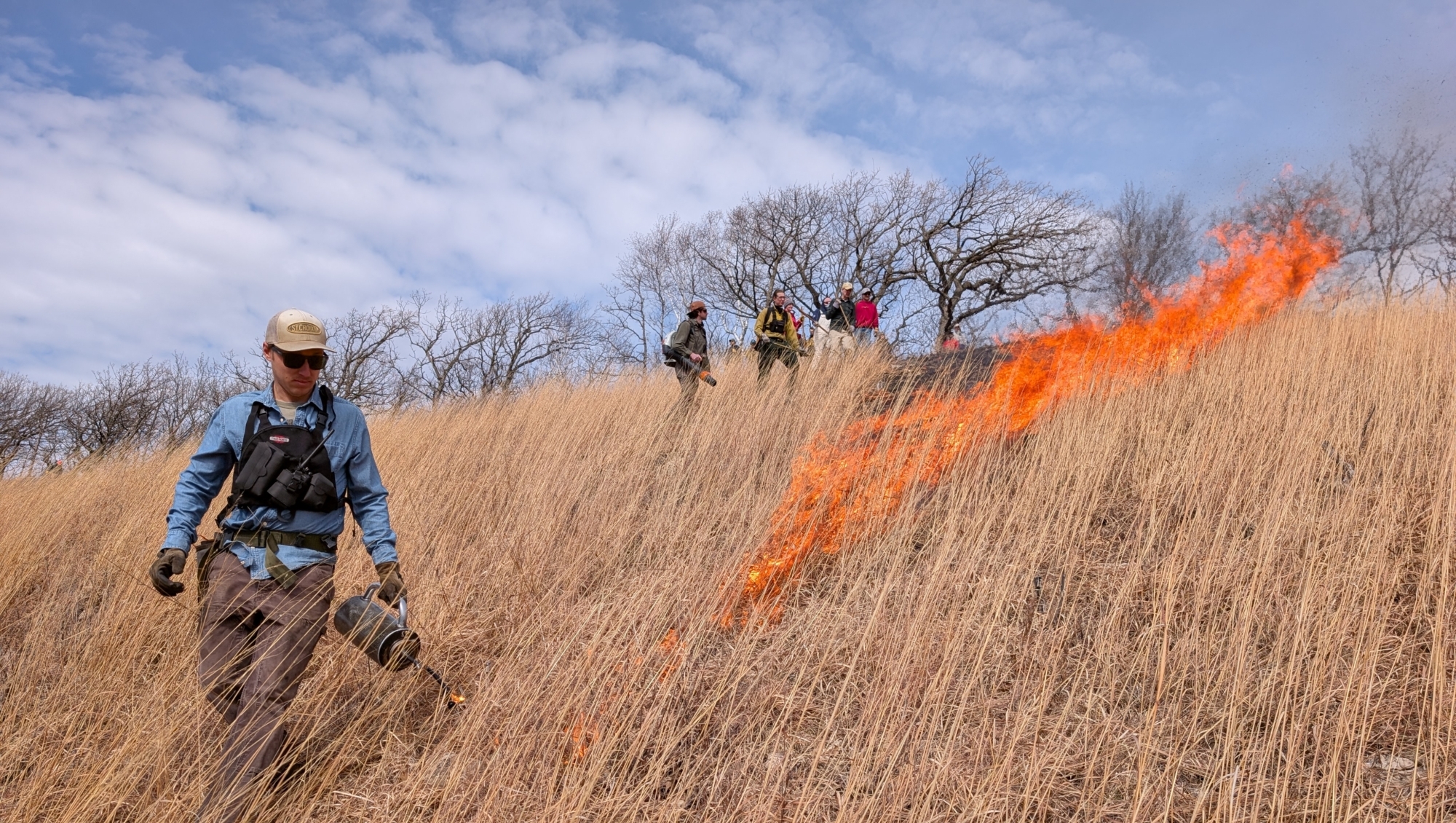
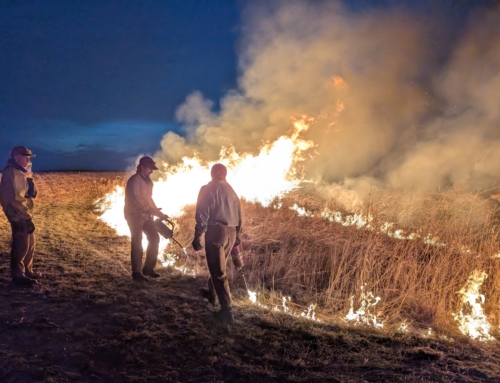
The two main Goat-Lining techniques either work their way uphill from a low-on-the-slope ignition point, or they work downhill from a point high on the slope. In the uphill working version ignition is made at the bottom and the fire is allowed to climb the slope of its own accord. This is basically a controlled spot-fire (spot fire suppression is actually how this technique was observed/developed). The suppression crew follows the downwind flank of the fire as it climbs, working from the ignition point uphill, as it mellows into a state of ‘repose’ and becomes a flank/backing fire that is easy to extinguish. The downhill working form of the technique requires a drip torch beginning ignition on top of the bluff and continuing to work its way downslope as the suppression crew follows, working the flame front as it mellows out in a similar fashion.
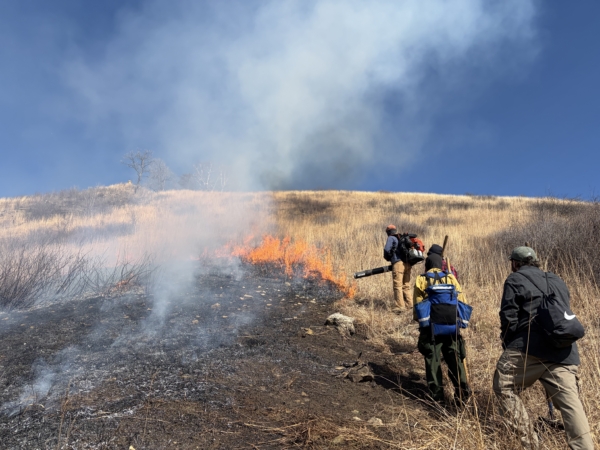
Working Uphill (PC Johnny Micheel)
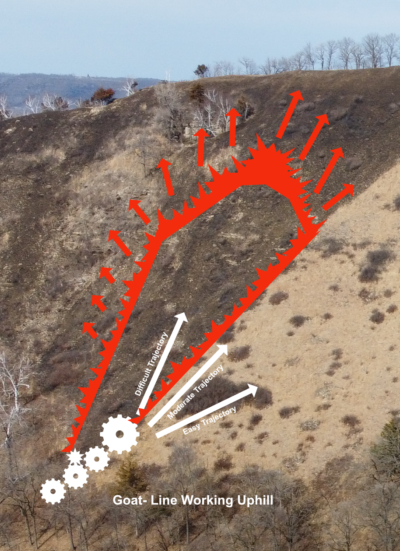
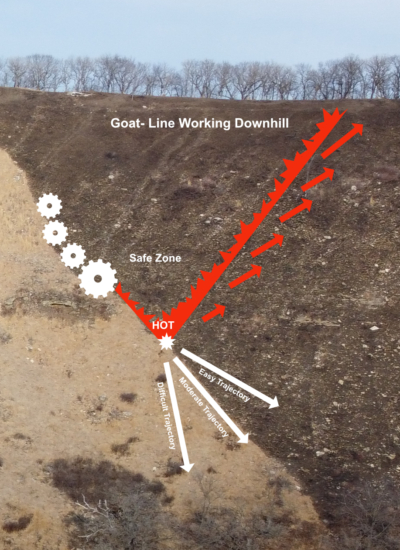
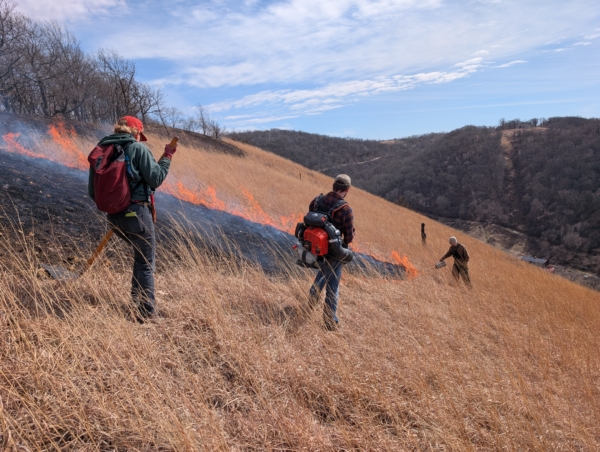
Working Downhill
The Crew
The Goat Line crew consists of a handful of individuals who are fit enough to climb around on the steep slopes with suppression tools and the confidence/experience to work an active fire line. This season our fire suppression crew was lead by a backpack blower, which was able to extinguish almost all of the flame on its own. The blower was followed by a series of swatters and rakes who were in charge of making sure no small burning bits remained. The hand tool crew extinguishes all remaining flames, kicking embers into ‘the black’ and tossing any smoldering chunks of wood away from the line. The opposite flank of fire is allowed to mellow and creep as far as desired. It is important to have some extra crew members on the Goat-Line in case anyone needs a break from the hot work, or in case the blower were to break down or run out of fuel. It’s a bit more work swatting a line out instead of using a blower first, but still doable.
The lead individual, whether the blower (when working uphill) or the igniter (when working downhill), chooses an appropriate trajectory for the direction of work. Holding a steep line straight up or down a slope may be more difficult or risky while, in contrast, a shallow-sloping trajectory may be easy to suppress but requires a further distance of operation. Experience will guide your choices here. Adjustments can be made while you work. Sometimes the wind effects will vary at different points on a slope. The blower operator must be paying attention to where sparks are bring thrown, and may even decide to let the swatters take over.
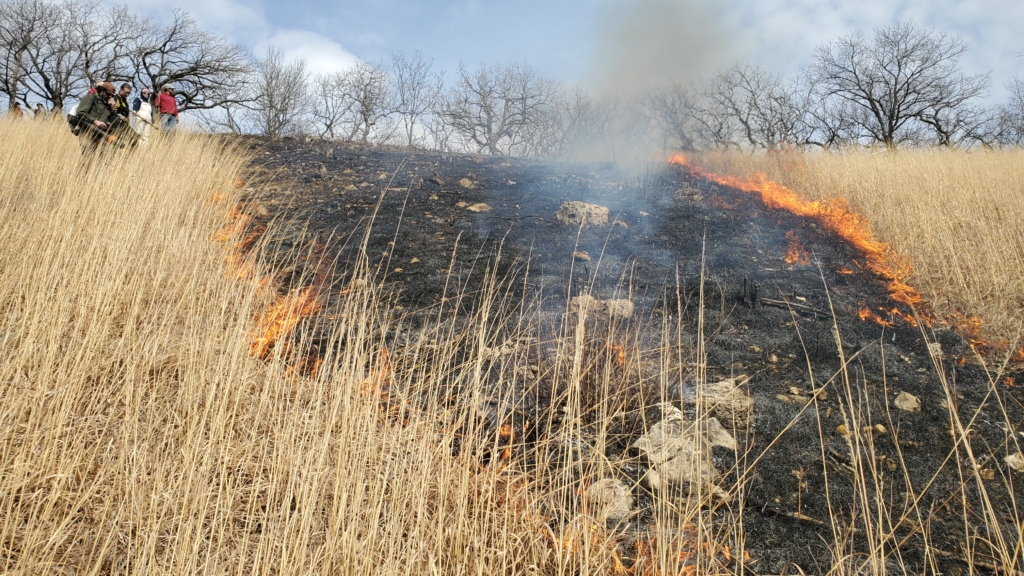
(PC TJ Boettcher)
Remember to always know where your Safe Zones are. They may be below you on the slope, and they may be in the already-burned ‘black’. While working downhill, it is important to allow for extra space between the person doing the ignition and the following suppression crew, since directly above the ignition will be a space with higher flame lengths and a plenty of heat. Always maintain good communication between crew members. No members should hesitate to signal for a slower pace or a shallower trajectory. Everyone should always be looking over their shoulders for spot fires or points on the line that have reignited. Wind changes may require adaptation or temporary pauses.
The Future
I’m confident that Goat-Lining will become our new standard practice. Because of the input reductions and the ability achieve results right on burn day, this technique can be applied to sites that have not been using optimal refugia practices due to capacity limitations. Maybe we can even get another site managed with all of our extra time and energy we are saving! Burn safely everyone!
Thanks, Steve Winter, for humoring my need to experiment!
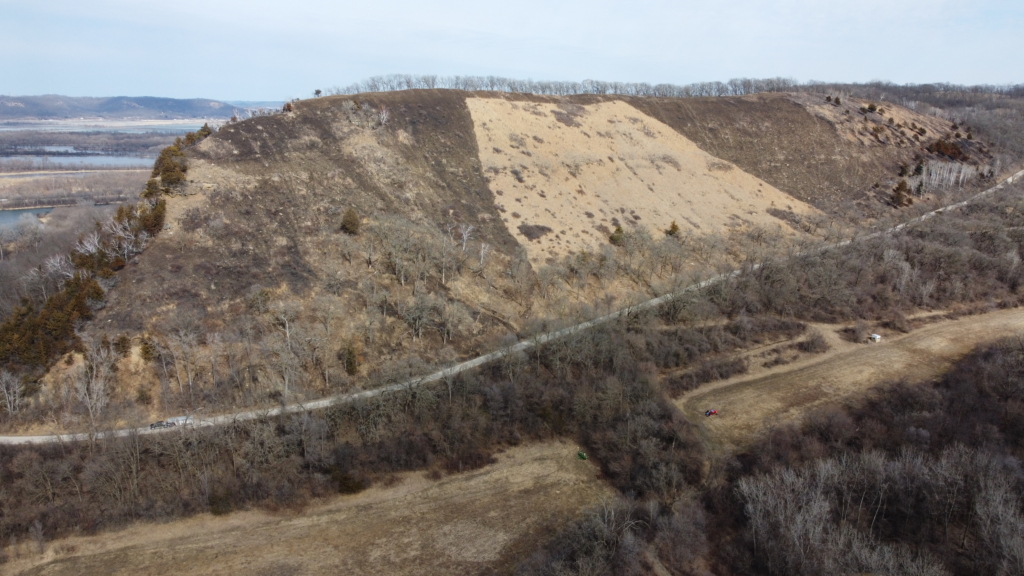
Pleasant Bluff, Winona MN – 03/2026

Leave A Comment