
In this blog post I am going to continue to lay out a basic framework for ecological restoration and land management within Southeast Minnesota. Much of the info that I provide may also apply well within other regions and ecosystems, but I am going to specifically focus on the specifics of Restoravore’s direct area of influence.
In previous posts I laid out a basic framework for understanding the ecosystems that we are likely to be working with in Southeast MN. This foundational knowledge is what will help to prevent us from wasting our time and resources on efforts that are doomed to fail. We are sure to confront some obstacles and will need to adapt to some unforeseen complications, but we will at least have avoided many of the more obvious pitfalls that arise from a misunderstood context.
Some may split hairs on distinctions between Restoration (restoring of something that is already present), and Reconstruction (rebuilding something that has already been lost). In the end these terms have quite a bit of overlap.
Within the contexts of our woodlands, prairies, and savanna in the upper midwest, a few key objectives may be helpful our goal setting. ‘Burn-ability’, and ‘Graze-ability’ are my top two picks. The presence (or absence) of these characteristics provide me with a shortcut that I often use to evaluate the health of a system and its potential for long-term service provision and biodiversity. I’ll state again that this may not be easily applicable to all ecosystems or in all regions.
Burn-ability
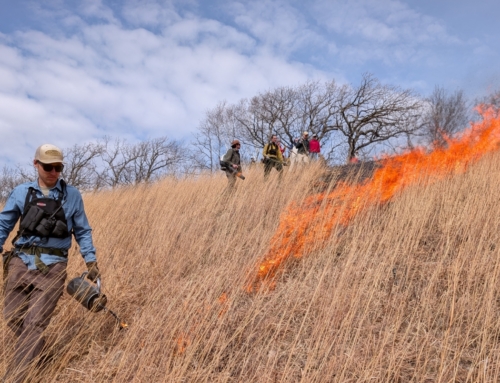
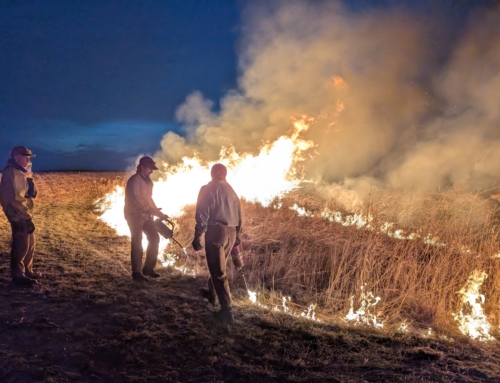
Burn-ability is simply the capacity for fire. If most of our historic landscape was adapted to fire, and most of the ecosystem members within that system coevolved with some sort of fire schedule or ‘regime’, it is vital for these systems to maintain that capacity. Whether we are considering the grasses and wildflowers of a prairie, the accumulated leaf litter of a savanna-woodland, or the pitchy fuels of a coniferous ecosystem, combustible fuels are necessary to feed this keystone process.
Fire, by itself, provides many services to an ecosystem. It reduces the buildup of thatch and accumulating litter, it mineralizes organic carbon into charcoal and incorporates it into the soil, it processes nitrogen, freeing some of it up for vigorous new growth and sending some of it onward through and even out of the local ecosystem (in this way it can even help address problematic nutrient overloading issues). Fire selects which species will have an advantage over others. A few consecutive seasonal burns can, in some cases, even mostly eradicate an invading species (like buckthorn). A fire-cleared landscape exposes seeds, allowing them to establish and thrive and encourages vigorous new growth from existing plants that is preferred by herbivores. To our own relief as humans, fire can even reduce tick and disease prevalence.
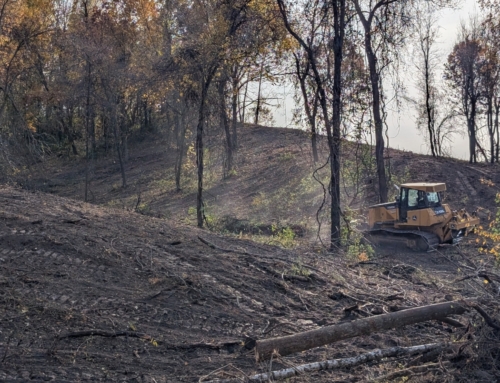
Much of my daily work entails taking sites that have lost their capacity to burn, and working to rebuild that capacity. By clearing accumulated woody vegetation and reducing a dense tree canopy we can set the stage for increased burn-ability. Often it is also necessary to bring in some native seed to restore proper conditions for fire. When a canopy becomes crowded and shady it is often the grass species that are the first to disappear (the fire-fuels). Sometimes sedges (grass relatives) may persist a bit longer, and sometimes there are tree species that provide decent leaf fuels that will burn, but many areas in our region are on a steep fuel-loss trajectory. Gaining personal experience in this kind of work helps guide us in evaluating how much fuel-provisioning vegetation we may need to add or favor.
Graze-ability
Similarly, graze-ability is the attractiveness of a system to herbivores. These herbivores could be native species like buffalo or elk, or modern substitutes like domesticated cattle, goats, or sheep. Within the prairie, savanna and woodland complex, species of this category would have been able to consume the vegetation, participate in carbon and nutrient flows, and select for varieties of plant species based on their taste, nutritional value, medical benefits, or simply convenience.
Some land managers place the importance of grazers even higher than that of fire. There are certainly many species (including many birds) that are specifically adapted to vegetation maintained at a shorter stature during the summer growing season (a common effect of summer grazing animals). In these same spaces fire may not have had the same effect, or may have occurred at a different time of year, thus failing to provide the right habitat for species like the lark sparrow or killdeer. The trampling of hooves works organic matter into the ground, building deeper soils, and sequestering carbon. The deposits of manure draw a whole host of additional species into play. Dung-beetles, flies, and even butterflies find animal droppings irresistible. Some of the sites with the richest invertebrate and bird diversity I have seen have been pastured sites.
Fire and grazing provide unique and complementary benefits. Both play key roles in maintaining the function of our ecosystems.
Synthesis
The processes of Fire and Grazing have varying effects within the ecosystem, each respectively enhancing the heterogeneity (internal variation) of the landscape. It is encouraging to me that we may often create a capacity for both of these simultaneously. The same vegetation, consisting mostly of grasses and wildflowers, together serve to make a site both burn-able AND graze-able. This simplifies our work dramatically. If we can make sure that a site has (or gains) a capacity for these natural disturbance cycles, the future looks quite a bit more hopeful.
In the following post of this series, I will describe some of the common tools that we use in maintaining, restoring, or rebuilding our ecosystems.
This series of posts can be found in the ‘Resources’ page of our website.


Leave A Comment